OUR MODEL AT A GLANCE
Curriculum Providers
Singapore Math for strong conceptual understanding
Lesson videos are provided to support parents at home
Memoria Press for all other subjects
New content is taught in class; parents reinforce through practice & recitation
Subjects Covered
Math, Literature, Phonics, Spelling/Grammar, Christian Studies, Penmanship, Writing, Enrichment (read alouds, music, art, poetry, history, science), Grade 3 starts Latin
Curriculum choices are designed to support a smooth transition from parent-led learning to teacher-led instruction.
Instruction Model
Teacher-led on campus + guided at-home work with parents
On campus, teachers introduce new concepts, model thinking aloud, and guide discussion.
On home days, parents reinforce through structured practice and recitation.
Curriculum Providers
Our curriculum blends the strength of Singapore Math with the classical, literature-rich resources of Memoria Press to provide a cohesive and thoughtful course of study.


Classical Education Overview
Mind & Character
This approach forms both the mind and character through the pursuit of truth, goodness, and beauty.
Rich Content
Classical education immerses students in rich, meaningful content that builds knowledge and understanding over time.
Thoughtful Instruction
Students learn through intentional, teacher-led instruction that guides them toward clarity, mastery, and confidence.
Enduring Ideas
By engaging with enduring ideas and great works, students encounter what has stood the test of time.
Mind & Character
This approach forms both the mind and character through the pursuit of truth, goodness, and beauty.
Rich Content
Classical education immerses students in rich, meaningful content that builds knowledge and understanding over time.
Thoughtful Instruction
Students learn through intentional, teacher-led instruction that guides them toward clarity, mastery, and confidence.
Enduring Ideas
By engaging with enduring ideas and great works, students encounter what has stood the test of time.
What Is Classical Education?
A Time-Tested Approach
Classical education forms both the mind and character through the study of language, literature, history, mathematics, and science. Rather than following trends, it draws from enduring wisdom and emphasizes clear thinking and meaningful learning.
Content-Rich Learning
Students learn through content-rich instruction led by teachers, engaging with great books and foundational ideas that build knowledge, support critical thinking, and strengthen communication.
Thoughtful Methods
Classical methods such as memorization, narration, and discussion are used to deepen understanding and cultivate intellectual discipline, helping students learn how to think critically.
Truth, Goodness, and Beauty
Education is viewed as the pursuit of truth, goodness, and beauty, shaping wisdom, humility, and a lasting love of learning.
A Christian Foundation
When grounded in a Christian worldview, classical education orders all learning under God’s truth and helps students see the world as purposeful and meaningful.
The Ultimate Goal
Classical education prepares students to think clearly, live wisely, and learn independently throughout their lives.
“If you abide in My word, you are My disciples indeed. And you shall know the truth, and the truth shall make you free.”
Why Classical Education
Mastery Before Moving On
Students are given time to fully understand concepts before advancing, building confidence and preventing gaps that can undermine future learning.
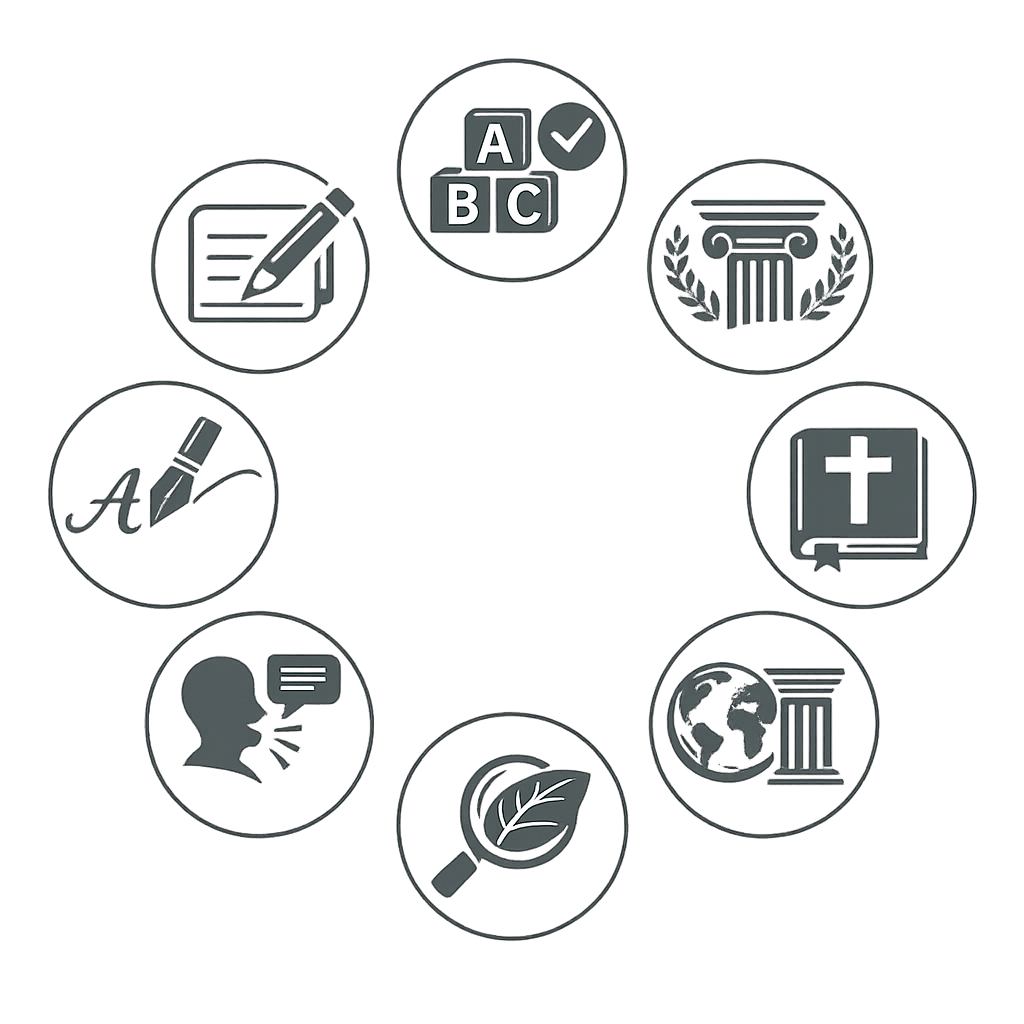
A Turn from Technology to Paper and Pencil
Learning with paper and pencil strengthens focus, fine-motor skills, and memory, allowing students to think deeply without the distractions of screens.
The Study of Latin
Latin equips students with a foundation for vocabulary, grammar, and logical thinking, supporting reading comprehension across all academic subjects.
The Study of Western Civilization and Modern Studies
Students learn history in context, understanding the foundations of Western thought while thoughtfully engaging with the modern world.
Cursive Writing
Cursive writing develops fine-motor coordination and supports fluency in reading and writing while connecting students to historical texts and documents.
Nature Studies
Direct observation of the natural world fosters curiosity, attentiveness, and wonder, helping students see God’s creation as ordered, meaningful, and worthy of care.
Christian Studies
Christian studies order learning under God’s truth, guiding students to see all knowledge as connected and shaping both academic growth and character.
Recitation
Through memorization and oral recitation, students internalize language, facts, and ideas, strengthening memory, confidence, and clarity of expression.
Classical Literature
Reading enduring works exposes students to rich language and timeless themes, shaping moral imagination and cultivating thoughtful discussion.